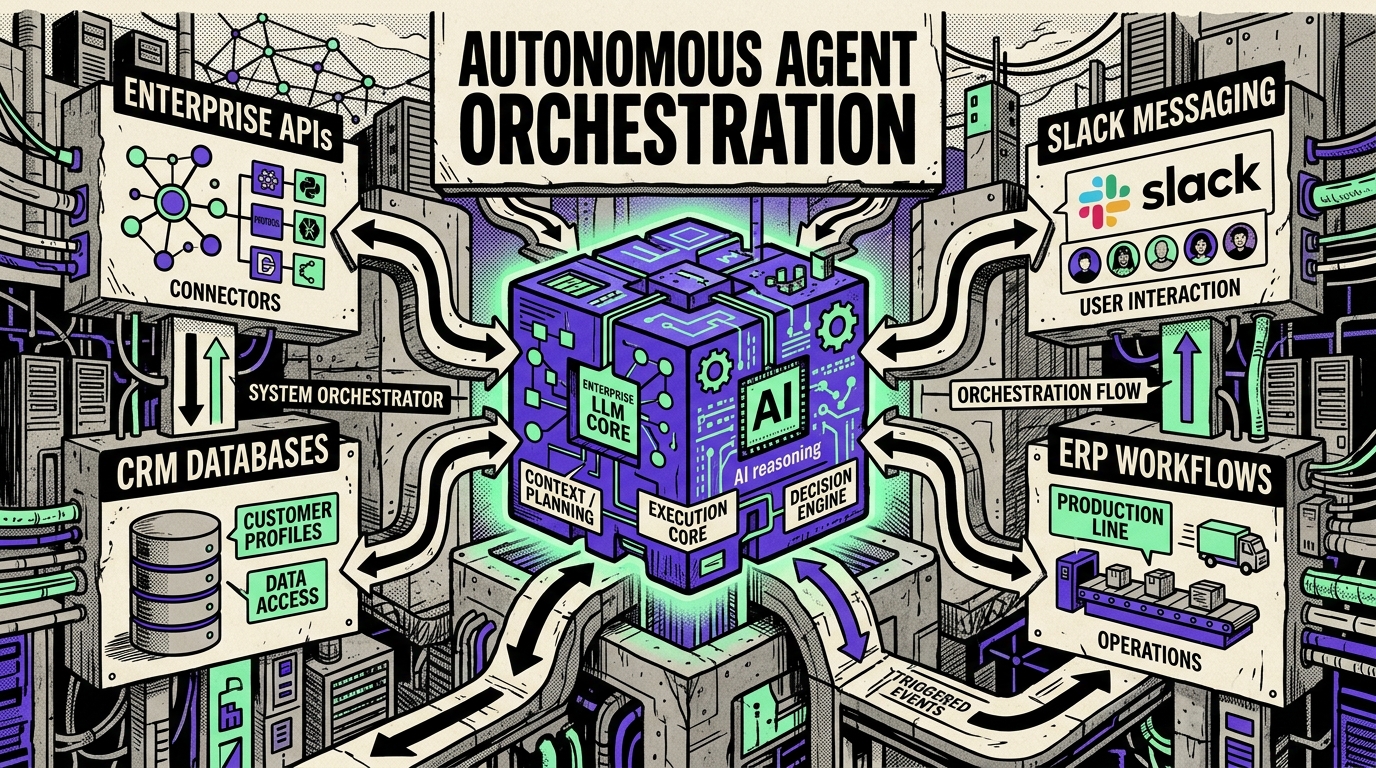
Getting GPT-4 to answer a question is easy. Running it reliably and affordably at scale is the real engineering. Here is the reference architecture I use across my automation projects.
Layered prompt design
I split prompts into a stable system layer, a dynamic context layer, and a task layer. Only the context and task layers change per request, which keeps behaviour predictable and makes prompts easy to version and test.
Cost control and caching
Every LLM call adds cost and latency. Useful control patterns include caching deterministic sub-results, routing simpler tasks to cheaper models and reserving more capable models for harder reasoning. I do not publish a measured cost reduction for the outreach pipeline, so this article does not claim one.
Reliability patterns
Timeouts, retries with backoff, structured output validation, and a fallback path for every LLM node. If the model returns malformed JSON, validate it and use a defined repair, retry or fallback path. The Gignaati deployment-time result is a separate setup-automation metric, not a benchmark of LLM output handling.